Inha University
Feb 2025 – Feb 2027 (Expected)
M.S. in Artificial Intelligence
I am a M.S. student in Artificial Intelligence at Inha University, affiliated with the Generative Computing Lab, advised by Prof. Namhyuk Ahn. I received my B.S. in Electronic Engineering from Inha University in Feb 2025.
Previously, I worked as a Computer Vision Developer intern at Light Vision (Jun 2024 – Dec 2024).
I am interested in image generation, generative AI, and large language models (LLMs), and especially in building diverse, practical applications powered by these AI technologies.
I also keep a notes site where I write about what I'm studying and the projects I'm working on.

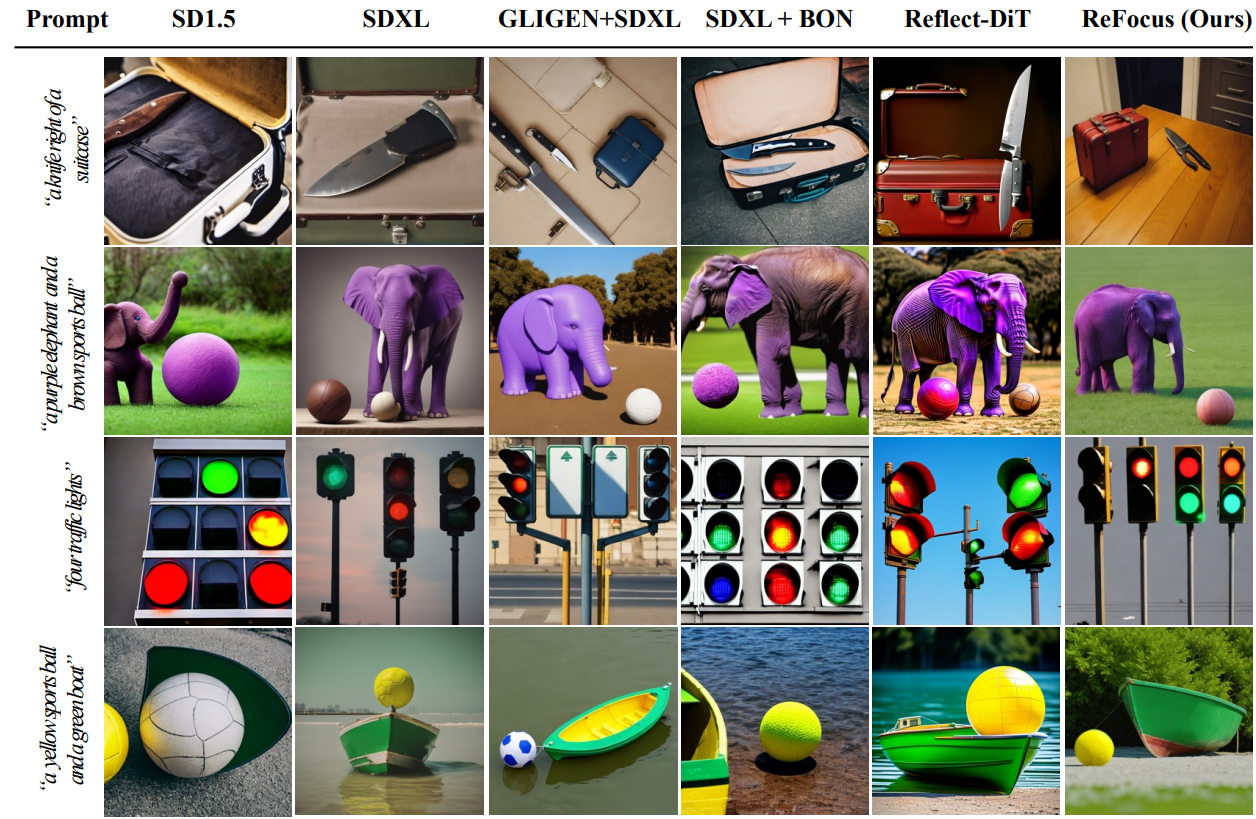
TL;DR: A training-free framework that improves compositional text-to-image generation by grounding LLM-synthesized layouts and reranking candidates with an object-centric VLM judge at inference time.
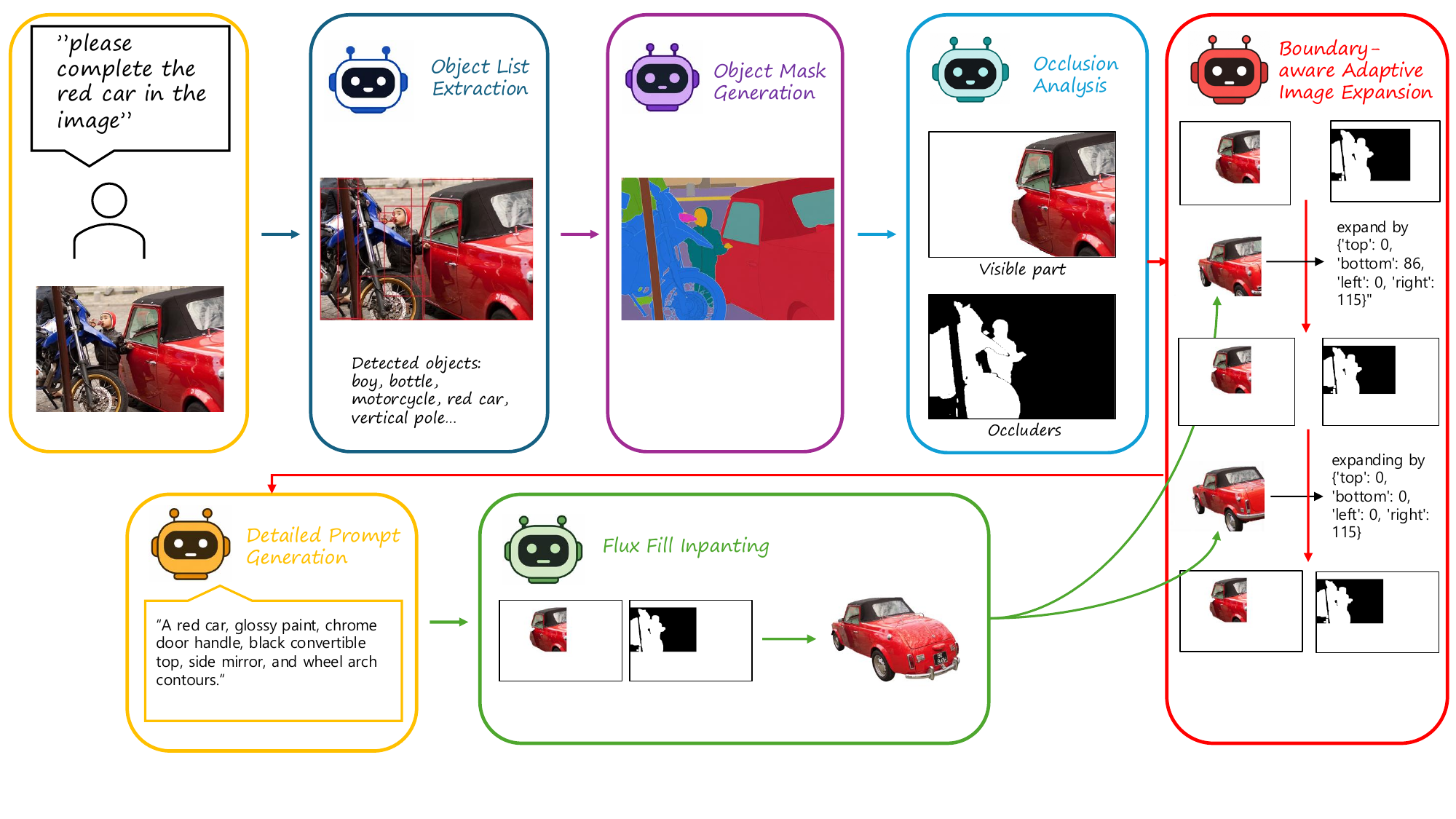
TL;DR: A vision-language model drives every stage of occluded-object completion — dynamically discovering scene entities, judging and adaptively expanding boundary-truncated regions, and writing appearance-aware inpainting prompts — reducing detection failures and improving reconstruction quality over fixed-pipeline baselines.


Research on diffusion models and generative AI, focused on text-to-image generation.
Developed computer vision models for an unmanned parking control system, including crowd counting, weather classification, and water segmentation.
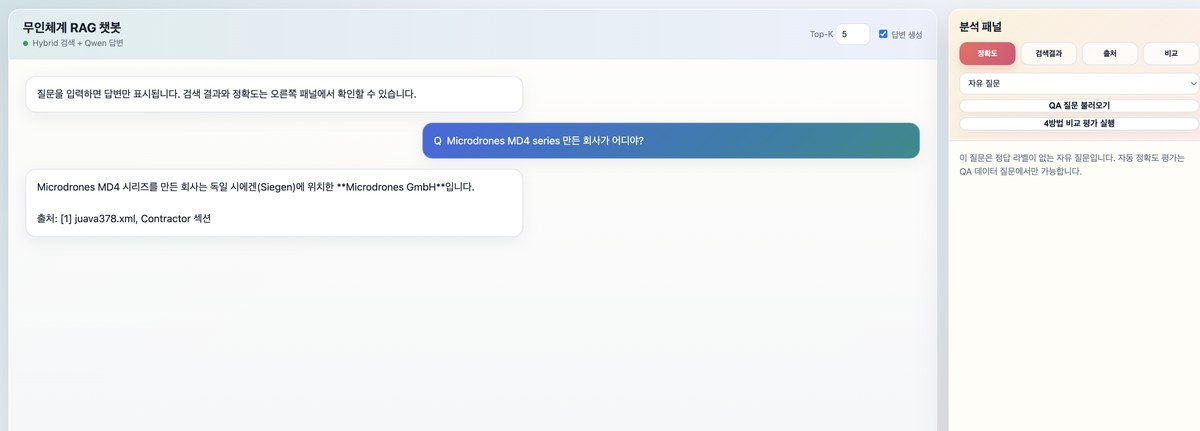
A retrieval-augmented QA chatbot over Jane's Unmanned Systems spec documents (350 documents split into 1,849 section-level chunks). BM25 keyword search and BGE-M3 dense retrieval are fused with Reciprocal Rank Fusion, and Qwen3.5-9B generates answers with source citations, so questions can be asked in Korean over English documents. On a rule-generated benchmark of 2,299 QA pairs across 11 question types, the hybrid retriever reached Hit@1 88.3% and Hit@5 99.3% (vs. 26.7% and 80.8% for BM25 alone), and adding the retrieved context raised answer Token F1 from 8.8% to 48.3%. (AI Convergence Project course, 2026)
A training-free framework that improves compositional text-to-image generation by grounding LLM-synthesized layouts and reranking candidates with an object-centric VLM judge at inference time.
project page code
A VLM-driven pipeline that reasons through entity discovery, occlusion-order filtering, adaptive boundary expansion, and appearance-aware prompting to reconstruct occluded objects. Published in KIISE Transactions on Computing Practices.
code
A real-time model that analyzes CCTV footage from an unmanned parking control system to detect crowd density and count people during accidents or emergencies. (Light Vision)
A deep learning model that quickly recognizes and automatically classifies adverse weather conditions, such as heavy rain and heavy snow, from parking lot CCTV footage. (Light Vision)
A segmentation system that precisely detects water regions in CCTV footage to distinguish normal conditions from flooding, for disaster preparedness. (Light Vision)